If you've ever worked in a plant where bulk materials need drying-think grain byproducts, rendered residues, or industrial powders-you know how much a dryer's performance moves the needle. I'm the lead tech at a company that supplies industrial tube bundle dryers, and I get questions all the time: "Does the length of those metal tubes actually matter, or is that just a random spec manufacturers throw around?" The short answer? It's one of the most underrated variables affecting drying efficiency. Skip paying attention to it, and you could end up with longer dry times, higher energy bills, or even inconsistent final product moisture. Get it right, and you'll cut costs and speed up throughput without messing with other pricey upgrades.
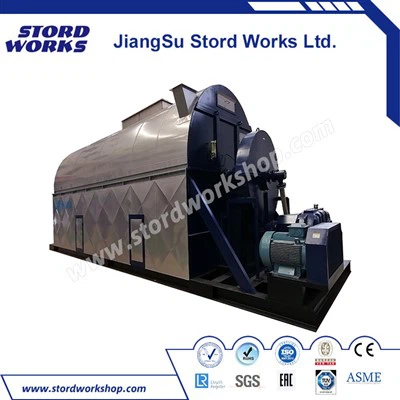
Let's break this down like I would for a plant manager sitting across my desk, no fancy engineering jargon unless it's necessary. First, what even is a tube bundle dryer, anyway? It's a workhorse machine that uses heated tubes (usually steam-heated, most often a Steam Tube Dryer) mounted inside a rotating shell. Wet material gets fed into the shell, and the spinning motion tumbles it against the hot tubes-heat transfers from the tube walls to the material, evaporating moisture. The tubes are arranged in bundles, and their total length per bundle is the key here, not just how many tubes there are or how big the shell is.
Drying efficiency boils down to two things: heat transfer rate and residence time of the material. Heat transfer is how fast energy moves from the tubes to the wet material, and residence time is how long the material stays in the dryer. Tube length ties directly to both. Let's start with heat transfer. Every foot of a heated tube is a surface area for heat to hit the material. If you have a 100-foot tube vs. a 50-foot tube, that's double the surface-more space for heat to move, right? But it's not just raw surface area; it's how that surface interacts with the tumbling material inside the shell.
Here's a real-world example we saw last year with a corn fiber customer. They were using a standard tube bundle dryer with 6-foot-long tubes, and they were ending up with 12% moisture in their final product when they needed 8%. They tried cranking up the steam pressure, which upped the tube temperature but only cut moisture to 10%-and their energy bill jumped 18% in a month. We swapped their 6-foot tubes for 10-foot tubes, kept the same shell size and steam pressure, and suddenly they hit 7.8% moisture right out the other end, with no extra energy. That's the Corn Fiber Tube Bundle Dryer upgrade we tailored for their process, and it worked because we added more heat transfer surface without wasting steam.
But wait-there's a catch here. It's not like longer tubes always equal better drying. If you make tubes too long, you end up with a material flow problem. The spinning shell carries material up to a certain height before it tumbles down; if the tubes are extra long, they block that flow. Wet material can get stuck in dead zones around the far end of the tube bundle, where there's less agitation and slower heat transfer. We saw this with a rendering plant that went all-in on 20-foot tubes a few years back. They thought more length = more drying, but instead, 30% of their material sat in the back third of the dryer, taking twice as long to move through. Their throughput dropped 12%, even though their per-unit energy use was slightly lower. That's why we never just push longer tubes blindly-we match tube length to the material's properties.
Different materials have different drying needs, which is where tube length gets calibrated. Let's split it up: low-moisture, free-flowing materials (like grain dust or corn fiber) move easily, so they can handle longer tubes. Their particles don't clump up, so they keep tumbling past every inch of the tube bundle. Sticky, high-moisture materials (like wet sludge or rendered fat) need shorter tubes. The shorter length means less blocking, so the material moves through the dryer faster instead of gunking up the tubes. That's why a Tube Bundle Dryer For Rendering Plant almost always uses shorter tubes than a dryer for dry, powdery corn products.


Another factor: air flow inside the shell. Tube length interacts with the exhaust fan that pulls moist air out of the dryer. If tubes are too long, they disrupt the air path-moist air can't escape as easily, so it condenses back onto the material instead of being pulled out. That creates a cycle where the material stays wet longer, even with hot tubes. When we optimize tube length, we adjust it so the air flow path stays open, letting moist air exit quickly. This is why our High Efficiency Tube Bundle Dryer designs use a sweet spot for tube length-usually between 8 and 12 feet for most standard materials, with tweaks up or down based on the user's product.
Wait, let's talk about rotary tube bundle dryers too-those are the ones with a slightly tilted shell, right? They use gravity to move material through, so tube length here affects how much time gravity has to work. If tubes are too short, the material moves through so fast that heat doesn't have time to transfer all the way. For a Rotary Steam Tube Dryer drying a low-moisture powder, a 10-foot tube gives enough residence time-material takes 20 minutes to move through, which is exactly how long it needs to absorb enough heat. A 6-foot tube would have material moving through in 10 minutes, leaving moisture behind. We've tested this with multiple clients; swapping rotary tube lengths by 4 feet cut their rework rate (product that's too wet and needs to go back through the dryer) by 25% on average.
Let's address a myth I hear all the time: "Longer tubes mean more maintenance." People worry that longer tubes will bend from the weight of wet material or cause more wear on the shell. Yeah, that's a risk if you skimp on material quality or get tube length wrong, but we design our tubes to handle that. We use high-grade carbon steel with reinforced ends, so even 12-foot tubes hold up just as well as 6-foot tubes in the right setup. The maintenance cost difference ends up negligible compared to the energy savings and throughput gains from better efficiency.
How do we figure out the right tube length for a specific client? It's not just a numbers game-we test their material in our in-house lab first. We run small-scale dryer trials with different tube lengths, measure the moisture content, energy use, and throughput, then pick the sweet spot. For example, a client processing distillers' grains (a common byproduct in ethanol plants) came to us with a 10-foot tube dryer that was only hitting 10% moisture when they needed 7%. We ran trials with 12-foot tubes, and not only did they hit 7% moisture, their throughput went up 15% because the extra length let them use a slightly slower shell speed, reducing wear on the machinery.
Another hidden perk of nailing tube length: reduced steam usage. Steam is the main heating source for tube bundle dryers, so if heat transfer is more efficient (thanks to the right tube length), you don't need as much steam to get the same drying result. One of our food processing clients switched from 7-foot to 9-foot tubes, and their monthly steam bill dropped by 14%-that's thousands of dollars a year they can put back into other parts of their plant.
But what if you can't swap out tubes? Maybe you own a dryer that's already installed, and you don't want to rework the whole bundle. There are smaller tweaks you can make, but they're not as effective. For example, you can adjust the shell rotation speed-slower speed gives material more time to contact the tubes, which mimics some of the heat transfer of longer tubes, but it also lowers throughput. Or you can adjust the steam pressure, but that only works up to a point-too much pressure can cause steam condensation issues inside the tubes, which actually slows heat transfer. So while those are quick fixes, they're no substitute for getting the tube length right.
I've seen a lot of plants waste money by ignoring tube length. They buy the biggest shell they can afford, cram in as many tubes as possible, and end up with a dryer that either dries too slow or uses too much energy. The smart approach is to treat tube length as a separate, customizable variable, not just a side spec. That's why all our industrial tube bundle dryers are modular-we can adjust tube length, number of tubes, and bundle arrangement to fit a client's exact needs, instead of selling a one-size-fits-all machine.
At the end of the day, drying efficiency in tube bundle dryers isn't just about "more heat" or "bigger surface." It's about matching every part of the machine to what you're drying, and tube length is one of the most impactful, underutilized parts of that. If you're looking to upgrade your dryer, or just troubleshoot why yours isn't hitting the moisture target, it's worth taking a hard look at your tube length.
If you're ready to optimize your drying process, or just want to chat about what tube length makes sense for your material, reach out to us for a no-obligation consultation. We'll walk through your current setup, run a quick trial if needed, and help you pick the right tube bundle dryer to boost your efficiency and cut costs.