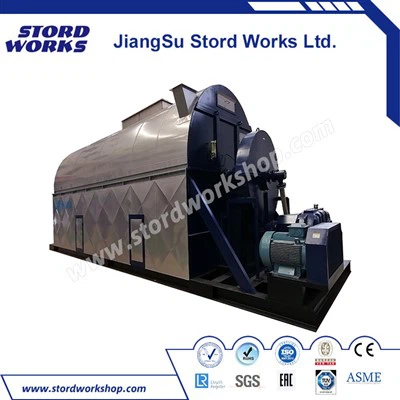
If you've ever worked in industries like food processing, biomass handling, or chemical manufacturing, you know that drying is one of those make-or-break steps. Get it wrong, and you're looking at inconsistent product quality, higher energy bills, or even damaged materials. That's why tube bundle dryers (TBDs) have become such a go-to for so many operations-they're efficient, gentle on product, and work well with a wide range of wet materials. But when you start shopping around, you'll quickly notice two main types: horizontal and vertical stainless steel tube bundle dryers. As a supplier who's spent years helping clients pick the right dryer for their needs, I've seen firsthand how the difference between these two styles can make or break a project.
Let's break this down like we're chatting over a coffee, no stuffy jargon here. First, let's start with the basics: what is a tube bundle dryer, anyway? At its core, it's a drum filled with a bunch of hollow stainless steel tubes. Hot steam (or another heating medium) flows through those tubes, and the wet material gets tumbled around outside them. The heat transfers from the tubes to the material, evaporating moisture, and the vapor gets pulled out with a vacuum or exhaust fan. The stainless steel build is a big win too-it's corrosion-resistant, easy to clean, and holds up way better than carbon steel for food or sanitary-grade products. That's why you'll see them used for corn fiber, cassava, and other food-grade materials more than almost any other type of dryer.
Now, horizontal vs. vertical. The first big difference is the orientation of that main drying drum. Horizontal TBDs have the drum lying flat, like a big metal log, spinning around a horizontal axis. Vertical ones stand upright, so the drum spins around a vertical line, kind of like a top spinning on a table. That simple flip changes just about everything else.
Let's start with capacity and footprint. For most operations, capacity is a top concern. Horizontal tube bundle dryers tend to be larger in total volume, right? Because the flat drum can be extended longer or made wider without getting too wobbly. That means they're better for high-throughput jobs-if you're drying tons of corn fiber every hour, a horizontal unit might get the job done faster. But wait, there's a catch: horizontal dryers take up a lot of floor space. If your plant has limited real estate, like a tight corner in a processing facility, a horizontal unit might not fit. Vertical ones, on the other hand, are tall but take up a smaller footprint on the ground. They're designed to go upward, so if you have vertical space but not much horizontal, vertical is the way to go. I've had clients with small cassava processing setups in rural areas where floor space was at a premium swear by vertical units-they fit right in between the storage silos without hogging a bunch of room.
Next up, heat transfer efficiency. This is where the two really diverge, and it's not just about numbers. Horizontal dryers: the tubes are spread evenly along the length of the flat drum. As the drum spins, the material tumbles over and over, coming into direct contact with the hot tubes. The downside here is that there can be dead spots-areas in the drum where the material doesn't circulate as well, so heat transfer is a bit uneven. But wait, horizontal units often use a bit more steam because they process more material at once, so if you're running a high load, that extra steam cost might be offset by not having to process as much total material. Now vertical TBDs: the tubes are arranged in a bundle that runs up and down the center of the upright drum. The material is lifted by flights (little metal shovels) on the inside of the drum, then dropped through the center of the tube bundle. That means every particle of material passes through the hottest part of the dryer repeatedly. No dead spots here-so heat transfer is more consistent, and you might use less steam overall. I've seen this play out with fiber products, especially Fiber Tube Bundle Dryer units: vertical models for fiber have a tighter, more uniform moisture content at the end, which keeps downstream processing (like pelletizing or packaging) way smoother.
Product gentleness is another big one, especially for delicate materials. If you're drying something like corn fiber, which can be brittle, or cassava starch, which can clump easily, you don't want the dryer to damage your product. Horizontal dryers: the tumbling action is a bit more violent because the drum is wide and spins faster to keep material moving. That works for tough materials, but if you're drying something delicate, you might get more fines or broken pieces. Vertical dryers: the material is lifted and dropped a shorter distance, and the flow is more controlled. It's a gentler process overall. A few years back, a client who was using a horizontal dryer for corn fiber started getting complaints about too many fine particles in their final product. Switched to a vertical TBD from our line, and they cut fines by almost 15%-a huge win for their product quality. Of course, the type of tube bundle also matters here. If you're looking for an indirect-heated unit (which is what most stainless steel TBDs are, since direct heating can contaminate food products), check out Indirectly Heateted Tube Bundle Dryers for more on how those work for delicate goods.
Maintenance is a part of the process that most people don't think about until something breaks. Horizontal dryers: because the drum is long, the tube bundles inside are easier to access. If a tube gets clogged or has a leak, you can slide the bundle out the end without too much trouble. That's a big plus for downtime-less time fixing, more time running. Vertical dryers, though, have the tube bundle stacked up in the center, so accessing the tubes means you have to climb up into the drum or take apart the top of the unit. That can be a hassle, especially for taller models. But here's the thing: vertical units usually have fewer moving parts related to the drum's support. Horizontal drums need heavy support rollers along the bottom to keep that long shaft spinning, and those rollers can wear out faster, requiring regular replacement. Vertical units have a simpler support system at the base, so long-term maintenance might be cheaper, even if occasional repairs are a bit of a pain.
Steam usage and operating costs. Let's get real-no one wants a dryer that drives up their utility bills. Horizontal TBDs, like our Rotary Steam Tube Dryer models, are designed for high volume, so they process more material per hour, which means they can be more cost-effective for large batches. But because of those dead spots I mentioned earlier, you might end up using 5-10% more steam than you would with a vertical unit to get the same drying result. Vertical units, on the other hand, have that more consistent heat transfer, so you use less steam to dry the same amount of material. For small to medium operations, that adds up over time. A client who runs a small cassava processing plant told me that switching from a horizontal to a vertical Cassava Tube Bundle Dryer cut their monthly steam bill by about $800-not bad for a small tweak.
Now, let's talk about use cases, because that's the best way to wrap your head around which is right for you. If you're running a high-throughput operation with plenty of floor space, like a large corn processing plant that's drying tons of corn fiber daily, a horizontal stainless steel tube bundle dryer is probably your go-to. They can handle big loads quickly, and accessing the tubes for maintenance is a breeze. But if you're in a spot with limited floor space, dealing with delicate products that need gentle handling, or looking to lower long-term utility costs, vertical is the way to go. We've seen this time and again: for small to mid-sized fiber processing facilities, the Tube Bundle Dryer For Corn Fiber vertical models have been a game-changer for their bottom line and product quality.
Wait, a common mistake I see clients make is thinking that one type is universally better. It's not-there's no "best" dryer, just the best dryer for your specific needs. I've had a client with a small chemical plant that used to run a horizontal dryer but switched to vertical because their floor space got tight when they expanded their storage area. Another client with a huge agri-processing plant stuck with horizontal because their volume was too big for a vertical unit to keep up. It all comes down to three main factors: your available space, your production volume, and the type of material you're drying.
Another thing to note: stainless steel is non-negotiable for a lot of these applications. If you're drying food-grade materials like cassava or corn fiber, carbon steel can leach chemicals, get stained, or corrode, which means you have to shut down for cleaning more often. Stainless steel is easy to sanitize, holds up to repeated use, and keeps your product pure. Both horizontal and vertical TBDs can be made with full stainless steel construction, so that's a separate choice from orientation, though it's a key one for many of our clients.
Let's touch on a couple of edge cases. What if you're drying something really wet, like filter cake? Horizontal units can handle the initial high moisture better because the tumbling action helps break up clumps before they stick to the tubes. Vertical units might need a pre-dryer to get the moisture down a bit before feeding into the TBD, otherwise, clumps can clog the tube bundle. On the flip side, if you're drying a fine powder, vertical units are better because the controlled flow prevents the powder from being carried away in the exhaust air-something that's more common in horizontal dryers with faster tumbling.
Maintenance tips that I pass along to every client, no matter which type they pick: first, clean the tube bundles regularly. For horizontal units, that means checking each tube for scale buildup, which can reduce heat transfer over time. For vertical, pay attention to the bottom of the tube bundle, where material can get trapped. Second, monitor the drum's speed-too fast and you'll damage product, too slow and material will sit in dead spots. Third, keep an eye on the steam pressure. Both types work best with consistent steam flow, so if you notice fluctuations, it's worth checking the valves before it causes a big issue.
At the end of the day, the difference between horizontal and vertical stainless steel tube bundle dryers boils down to trade-offs. Horizontal is great for high volume and easy access, but takes more space and can be less efficient. Vertical saves space, is more efficient for smaller loads, and is gentler, but is trickier to maintain. For any operation, the right choice depends on your space, your throughput, and the material you're drying. If you're still not sure which fits your needs, we can help walk through your process, ask the right questions, and point you to the models that will work best-whether that's a horizontal unit for high-volume corn fiber drying or a vertical model for your small cassava processing setup.
Ready to talk through your specific drying needs? We're here to help you find the right stainless steel tube bundle dryer that fits your operation's goals. Reach out to us to discuss your project and get tailored recommendations.