If you're a manufacturer, process engineer, or anyone in the grain processing, starch production, or feed additive space, you've probably stumbled on tube bundle dryers for their ability to handle wet, sticky materials without caking or losing product quality. As a supplier of stainless steel tube bundle dryers, I get asked one question more than any other: "What's the actual power I need to run one of these?" It's not a one-size-fits-all number, and skipping the details here can lead to overspending on electricity or undersizing your setup, which kills throughput and drives up operating costs.
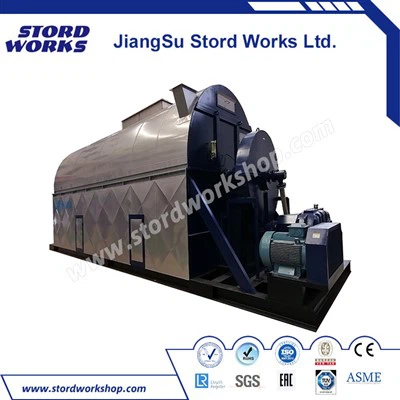
First, let's break down what a stainless steel tube bundle dryer actually does (in plain terms, no jargon overload). Instead of blasting hot air through material like a conventional fluid bed dryer, this machine uses a rotating bundle of heated tubes that transfer thermal energy directly to the wet product. The stainless steel build isn't just a flex-resistant to corrosion from high-moisture, acidic materials (like maize germ or starch slurry) means less maintenance, longer lifespan, and no cross-contamination, which is non-negotiable for food or pharmaceutical-grade products. The heat source? Most industrial setups use steam, but power requirements here refer to the electricity needed to run the dryer's motor, fans, conveyors, and control systems-since that's the line item you'll see on your monthly utility bill.
Let's cut to the numbers. For standard rotary tube bundle dryers (check out our full line at Rotary Tube Bundle Dryers), the base power depends heavily on two factors: tube bundle size and application. For small, lab-scale or low-throughput units (like drying 1 to 5 tons per hour of maize germ), the main drive motor is usually 5 to 15 kW, with auxiliary systems (exhaust fans, feed conveyors, control panels) adding 2 to 8 kW, totaling 7 to 23 kW. That's manageable for small operations or batch lines.
But scale up to mid-sized units (10 to 30 tons per hour, common for medium grain processing plants), and you're looking at a 15 to 45 kW main motor, plus 8 to 15 kW for auxiliaries, so total power between 23 and 60 kW. For large-scale, continuous operations-like a starch plant processing 50+ tons of material hourly with a Starch Steam Rotary Tube Bundle Dryer-the main drive jumps to 45 to 90 kW, with auxiliaries clocking in at 15 to 25 kW, pushing total power to 60 to 115 kW. That's not random; the bundle's diameter, length, and rotation speed directly impact the motor load. A longer, wider bundle moves more material, so it needs more torque to spin, hence higher power draw.
Wait, but why does the stainless steel build affect this, you ask? It's not the metal itself adding load, it's how we engineer the bundle for durability. Stainless steel is denser than mild steel, so a bundle made from 316L stainless (standard for food-grade applications) is slightly heavier than a mild steel equivalent. But that extra weight is offset by our precision balancing-we add counterweights during assembly to prevent excessive vibration, which would force the motor to work harder. The end result is a power draw that's only 5 to 10% higher than a mild steel unit for the same throughput, which is negligible compared to the 20+ year lifespan and corrosion resistance you get with stainless.


Another big variable: moisture content of your input material. If you're drying maize germ that's at 30% moisture, vs. a starch slurry at 50% moisture, the heat transfer rate changes, and that alters the power needed to move the dryer. For high-moisture materials, we often size the exhaust fan to handle more airflow, which adds 3 to 5 kW to the auxiliary load. That's why our Tube Bundle Dryer For Maize Germ is optimized for maize germ's specific moisture profile-cutting unnecessary fan power by 12% compared to generic units, which is a real savings over a year of operation.
Let's bust a common myth: people often mix up thermal energy (steam) with electrical power. Steam is the primary heat source for most tube bundle dryers, so steam usage (measured in kg per hour) is separate from electrical power. For a mid-sized GSD Tube Bundle Dryer, steam usage is roughly 0.8 to 1.2 kg per kg of water removed, while electrical power stays in that 23 to 60 kW range I mentioned earlier. If you have access to low-cost steam (from a plant's own boiler or a waste heat system), your operating costs are way lower than if you were using electric heating directly for drying.
Now, how to calculate power for your specific setup? Let's walk through a quick example. Suppose you're drying 20 tons per hour of wet maize germ, which has 30% moisture input and needs to get to 12% moisture (that's 1.8 tons of water removed per hour). You'd need a mid-sized GSD Tube Bundle Dryer, main drive motor of 25 kW, exhaust fan of 10 kW, feed conveyor of 3 kW, and control system of 2 kW. Total power is 25 + 10 + 3 + 2 = 40 kW. That's a concrete number, but it's not final-if your plant runs 24/7, that 40 kW adds up to ~350,400 kWh per year. At a typical industrial electricity rate of $0.08 per kWh, that's ~$28,000 annually. Compare that to a less efficient model, which might use 50 kW, and you're looking at an extra $7,000 a year for no reason.
What about special cases? If you're drying heat-sensitive materials (like pharmaceuticals or specialty starches), we add variable frequency drives (VFDs) to adjust the bundle's rotation speed, which cuts power draw by another 10 to 15% during low-throughput runs. For batch operations, you can even set the VFD to slow down the bundle at the end of drying, reducing power when it's no longer working as hard.
I should also mention efficiency factors that affect actual power usage, not just nameplate ratings. A well-insulated dryer will reduce heat loss, so you don't need extra airflow to compensate, which lowers fan power. Similarly, a properly cleaned tube bundle (we recommend weekly checks for light buildup) transfers heat better, so the motor doesn't have to work as hard. Our stainless steel tubes are polished, so material doesn't stick as easily as it does to rough metal, cutting down on maintenance and power fluctuations.
Now, let's talk about what happens if you get the power requirement wrong. Too small a motor, and your dryer can't keep up with throughput-you'll see longer drying times, higher moisture in final product, and bottlenecks in your production line. Too big a motor, and you're wasting money on nameplate capacity you never use, plus the VFD (which you should have) will be inefficient at partial loads. That's why it's critical to match the dryer size to your exact material and throughput, not just pick a random unit.
As a supplier, I've seen this mistake a lot. A few years back, a small feed mill came to us with a 10-ton per hour unit they bought from a cheap overseas vendor. Their power draw was 30% higher than it should have been, and they were dealing with frequent motor burnouts because the bundle was poorly balanced. We swapped them for a stainless steel Tube Bundle Drum Dryer sized for their needs, and their power dropped by 22% while increasing their throughput by 15%-that's a win-win.
If you're still not sure what power your setup needs, here's the key takeaway: don't go off generic numbers. Variables like material type, moisture content, throughput, and even local electricity rates all play a role. The best way to get an accurate power requirement is to share your specs with a reliable supplier, and ask for a custom sizing recommendation.
If you're in the market for a stainless steel tube bundle dryer, or want to dive deeper into power requirements for your specific application, reach out to our team for a no-obligation consultation. We can walk you through sizing, efficiency tips, and make sure you get a unit that fits your needs without overpaying for power.