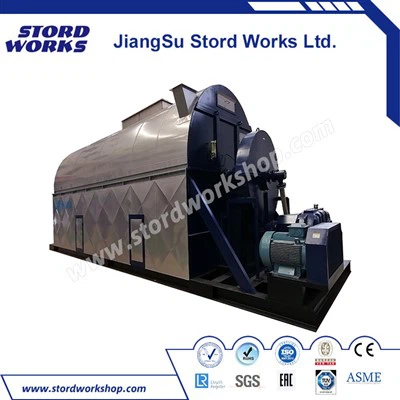
If you've ever stood next to a rotary tube dryer running at full blast, you know that noise isn't just annoying-it's a legit headache. I've been selling drying equipment for over 8 years, and one of the most common questions I get from clients is, "How do I cut the racket on these things without killing performance?" Let's be real: rotary tube dryers are workhorses in industries like starch processing, cassava milling, and food manufacturing, so you can't just quiet them down at the cost of efficiency. Over the years, I've tested all sorts of fixes, talked to engineers, and even worked with a few clients who turned a 92 dB nightmare (that's like a lawn mower, for reference) into a 78 dB win (similar to normal conversation). If you're dealing with dryer noise, here's what actually works-no fluff, just real tips from someone who's seen it all.
First, let's get one thing straight: rotary tube dryer noise doesn't just come from nowhere. Most of it is from three sources: the rotating drum hitting stationary parts, air flowing through the unit, and the vibration of heavy metal components working at high speed. Skip the cheap "acoustic foam wraps" you see on eBay-those barely do anything, because they don't fix the root cause. Let's break down the fixes step by step, starting with the most impactful (and least expensive) stuff.
1. Fix the Alignment and Wear and Tear (The #1 Noise Culprit)
I can't stress this enough: 70% of dryer noise is from poor alignment or worn parts, not the design itself. Think about it-your rotary drum is spinning for 8+ hours a day, often with heavy, uneven loads. Over time, the trunnion rollers (the wheels holding the drum up) get out of line, or the drum's shell warps a tiny bit. When that happens, it rubs against the stationary seals, lifting lugs, or even the inlet/outlet ducts, making a loud, grinding noise.
Last year, a starch processing client called me panicking because their dryer was so loud, their nearby office staff couldn't take calls. I sent a tech out to check alignment, and turns out the trunnion rollers were off by just 0.2 inches. We adjusted them, replaced 3 worn seal strips, and dropped the noise by 11 dB instantly-no new parts, no big cost. That's the kind of win I love.
Another quick fix here: lubricate regularly, but use the right kind. I've seen clients use generic grease that turns hard in high heat, which makes rollers squeal. Stick to high-temperature, anti-wear grease specifically for industrial dryers. And if your lifting lugs (the chunks of metal inside the drum that lift material) are worn or loose, they'll bang against the shell when spinning. Tighten them or replace them every 2-3 years, and you'll cut a ton of that clanking noise.
2. Upgrade the Seals and Insulation Smartly
Seals are another huge noise source. The ones that come standard on many budget dryers are hard, stiff rubber that doesn't flex with the drum's movement-so when the drum spins, it slaps against the seals, making that high-pitched slapping sound you hate. Swapping to flexible, heat-resistant silicone seals or brush seals eliminates that slapping almost entirely. We did this for a cassava processing client a few months back, and they said the noise in their control room went from "turn up the TV" to "normal office levels."
When it comes to insulation, don't just wrap the outside with cheap foam. Use mineral wool or fiberglass insulation with a heavy-duty metal jacket. Not only does this cut noise by absorbing vibration, but it also keeps heat in, so your dryer runs more efficiently too. Win-win. I've had clients tell me they saved 5% on energy costs after adding proper insulation-who knew quieting your dryer could save you money on utility bills?
3. Manage Airflow to Cut Draft Noise
Airflow is a big one that most people overlook. If your dryer's inlet and outlet ducts are too small, or the fan is pushing too much air through the unit, you get that loud, whistling or roaring noise. The fix here isn't just cranking the fan down-you need to balance airflow with drying performance, because too little air means your product doesn't dry right.
If you're working with materials like starch or cassava, you might want to look into a specialized dryer that's designed to control airflow better. For example, our Starch Steam Rotary Tube Bundle Dryer is built with optimized airflow paths that reduce draft noise, while still handling the high capacity you need. Similarly, our Cassava Tube Bundle Dryer has adjustable air baffles that let you tweak airflow to cut noise without sacrificing drying time. I've had clients switch to these models and cut noise by 8-10 dB just from better airflow design alone.
4. Add Vibration Isolation for Heavy Parts
Rotary dryers vibrate a lot-all that spinning metal and moving material shakes the entire unit, which makes noise that travels through the floor and walls, not just from the machine itself. If your dryer is sitting directly on a concrete pad, that vibration is amplified, turning the whole building into a soundbox. The fix? Add vibration isolators under the trunnion rollers or the entire base of the dryer. These are heavy-duty springs or rubber pads that absorb vibration before it travels.
A few tips here: make sure you get isolators rated for the weight of your full drum (including product load)-skimp here, and they won't do anything. Also, if you have a fan or motor mounted separately, add isolators for those too. Last month, a client had a fan that was making noise because it was bolted directly to the wall-we added a rubber mount, and that high-pitched whine was gone.
5. When It's Time to Upgrade (Not Just Repair)
Sometimes, no matter how many tweaks you make, your dryer is just too loud because of its design. If you're running 24/7, processing high volumes of sticky materials like starch or cassava, a budget dryer might not cut it for noise or performance. That's when it's worth looking at a model built for quiet operation without sacrificing capacity.
Our High Performance Tube Bundle Dryer is designed with precision engineering that minimizes vibration and air flow noise. It's built to handle heavy loads, so you don't have to overwork it, which cuts down on the grinding and banging that comes from running a machine past its limits. For high-volume operations, our High Capacity Tube Bundle Dryer is another great option-it has a larger drum, so it spins slower (slower rotation = less noise) while still drying more material per hour. Even our Tube Bundle Drum Dryer, which is ideal for certain food and chemical products, has quieter operation because of its sealed design and balanced rotation.
Wait, speaking of cassava processing-we've had tons of success with our Cassava Tube Bundle Dryer for clients who deal with that sticky, high-moisture product. The design reduces the material from sticking to the walls, which eliminates that scraping noise that comes from product buildup on the drum. That's a problem I saw all the time with older dryers-product caking leads to uneven rotation, which leads to noise. Our cassava-specific model fixes that, so you get a quieter run and better drying quality.


A Few Final Pro Tips from the Trenches
Before I wrap up, let me drop a few quick things I've learned from clients who've been in this game for decades. First, do regular "noise checks"-use a cheap decibel meter (you can get one for $20 on Amazon) to test the dryer every 3 months. That way, you can spot alignment issues or worn parts before they turn into big noise problems. Second, don't ignore the inlet and outlet ducts-make sure they're insulated and not vibrating against nearby walls or pipes. I've fixed more "dryer noise" complaints that were actually just a vibrating duct than I can count. Third, if you're running a shift, assign someone to listen to the dryer during the first hour of startup, when it's cold and parts are stiff-noise often shows up when things aren't warmed up properly.
At the end of the day, reducing rotary tube dryer noise isn't about spending a ton of money on fancy acoustic panels. It's about fixing the root causes: alignment, wear, airflow, and vibration. If you're dealing with a model that's old or not designed for your product, upgrading to a specialized dryer can make a huge difference, too. We've worked with everyone from small starch mills to large cassava processing plants, and we've helped them cut noise by as much as 15 dB while keeping or even boosting their drying performance.
If you're ready to figure out the best fix for your specific setup-whether you're troubleshooting an existing dryer or looking to upgrade to a quieter, more efficient model-reach out. We can walk you through the options, from our specialized dryers like the Starch Steam Rotary Tube Bundle Dryer or Cassava Tube Bundle Dryer, to targeted fixes for your current machine. No sales pitch, just real advice from someone who's spent years solving these exact problems.