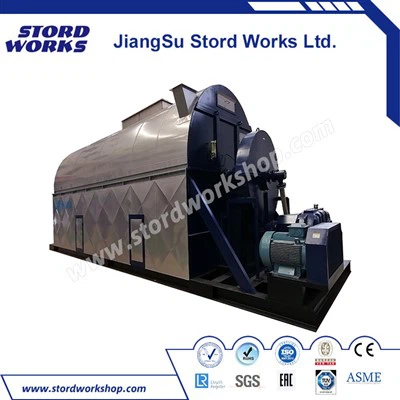
If you're running a tube bundle dryer operation, you know it's not just about firing it up and crossing your fingers. As someone who's been supplying these machines for years-talking to plant managers, maintenance teams, and operations leads every week-I've seen firsthand how small tweaks turn a finicky, energy-hungry dryer into a reliable, cost-saving workhorse. Whether you're processing abattoir waste, blood, or other organic materials (we've got specialized models for all of that, like our [Poultry Livestock Abattoir Waste Rendering Dryer] and [Blood Coiler Dryer]), optimizing your dryer doesn't have to mean a full equipment overhaul. Let's break down what actually moves the needle, from daily habits to long-term setup changes, no industry jargon required.
First off, let's get one thing straight: most operational headaches come from ignoring the basics. A tube bundle dryer works by heating the inside of metal tubes with steam or thermal fluid, while the wet material flows around the outside. The heat transfers through the tube walls to evaporate moisture, and the dry material moves through the machine until it exits at the desired moisture content. It sounds simple, but even a tiny blockage or misadjusted valve can throw the whole process off. I've had a client tell me their dryer was using 20% more steam than it should-turns out, a 1-inch layer of caked material on the tube surfaces had been building up for three months, insulating the metal and blocking heat transfer. Cleaning those tubes every two weeks (not just twice a year) fixed the issue overnight.
Speaking of tube cleaning, that's the single biggest routine optimization most operations skip. I can't stress this enough: fouling (the buildup of dried product on tube walls) is the silent killer of efficiency. When fouling builds up, the heat transfer coefficient drops-you need more heat to get the same amount of drying, which means higher utility bills, longer cycle times, and even uneven product dryness. So how often should you clean? It depends on your material, but a good rule of thumb is to check tube walls once a shift, and do a full mechanical or chemical clean every 100–150 operating hours. For sticky stuff like abattoir waste, we actually designed our [Animal Renderning Machine Tube Coiler Dryer] with self-cleaning tube baffles to reduce this buildup-small design feature, huge time-saver. Pro tip: when cleaning, don't use harsh abrasives that scratch the tubes; scratches just give more surface area for fouling to stick later. Stick to a food-grade (or whatever grade fits your product) alkaline chemical wash for regular maintenance, and a gentle mechanical brush for heavier buildup.
Next, let's talk about material feeding. If you're feeding too much wet product into the dryer too fast, you'll end up with a soggy mess at the discharge end, and waste heat will escape through the exhaust. Feed rate is a balancing act, but it's not a one-size-fits-all number-you have to adjust it based on your incoming moisture content and desired final moisture. Last quarter, a feedlot client was having trouble with their dryer overheating in sections and under-drying in others; we took a look and found they were feeding 15% more blood sludge when their supplier had a batch with higher moisture, without slowing down the feed. That caused a "clog" in the middle of the dryer, where wet material stuck to the tubes and blocked airflow. We adjusted their feed controller to automatically slow down when exhaust temperature spiked (a simple sensor tweak they could do themselves) and they cut their energy use by 12% in a month. Also, make sure your wet material is pre-sized before it goes into the dryer. Big chunks take longer to dry, so they sit in the machine too long, blocking airflow around the tubes. A 2-inch screen to break up large clumps makes a way bigger difference than you think.


Airflow is another make-or-break factor. Tube bundle dryers rely on a consistent flow of air to carry away the moisture that evaporates from the product. If your exhaust fan is running too slow, moisture gets trapped in the machine-you'll notice condensation dripping from the exit chute, or product coming out clumpy. If it's running too fast, you're wasting energy blowing heated air out the exhaust, and you might carry away fine product particles (called "fines") that get lost in the dust collector, hurting your yield. The sweet spot? You want the air velocity around the tube bundles to be between 1–2 meters per second for most organic materials, and you can check that by measuring static pressure in the dryer. Our [Horizontal Rotary Dryer] team always says: "If your static pressure is off by 0.5 kPa, your efficiency is off by 5%" - it's that sensitive. Another trick: insulate the dryer's body and exhaust ductwork. I've seen plants skip insulation to cut costs, but over a year, that costs way more in lost heat. A 50mm layer of mineral wool insulation on the dryer and ducts can reduce heat loss by 30%, which is basically free money back in your pocket.
Steam pressure is the next thing to dial in. The steam inside the tubes is what provides the heat, so if your boiler is supplying inconsistent pressure, your dryer's heat output will fluctuate, leading to uneven drying. Most tube bundle dryers run best at 4–8 bar of steam pressure, but some materials need lower pressure (like delicate blood products, which we handle on our [Blood Coiler Dryer]) to avoid overheating. The key here is to use a pressure regulator right at the dryer's inlet, not just at the boiler. Boilers often have pressure drops along the pipe, so a regulator at the dryer ensures you're getting the exact pressure you need, no guesswork. Also, drain the condensate from the tubes regularly-condensate is a byproduct of steam heating, and if it builds up in the tubes, it displaces steam and blocks heat transfer. A lot of operators wait until the end of the shift to drain, but doing it every 15–20 minutes keeps the tubes full of steam, not water. One client switched from draining once a shift to every 10 minutes, and their drying time per batch dropped by 20 minutes.
Now, let's cover some long-term adjustments that aren't just routine-things that can boost efficiency over the life of your dryer. First, check the alignment of the tube bundle. Over time, the dryer's support bearings wear out, and the tube bundle can shift, causing it to rub against the casing. That not only creates friction (wasting energy) but also creates gaps where material can get stuck and cause fouling. A quick alignment check every six months, and tightening the bearings if needed, will keep the dryer running smoothly. Second, upgrade your control system. A lot of older tube bundle dryers use manual controls-turn a valve here, adjust a fan there, and hope for the best. Modern PLC (programmable logic controller) systems can automatically adjust feed rate, steam pressure, and fan speed based on real-time moisture sensors at the discharge. We've helped several plants upgrade, and one rendering plant told us their labor costs for the dryer dropped by 40% because they didn't need someone to babysit the controls all shift.
Don't forget about post-drying steps, either. If you're drying a product that needs to be stored or sold, a poor post-drying process can undo all your dryer efficiency gains. For example, if you let hot product pile up in a bin after drying, it can reabsorb moisture from the air, making your final product wetter than you intended. A quick cooling step (even a small air-cooled conveyor after the dryer) brings the product down to ambient temperature, locks in its dryness, and prevents spoilage. That's a small add-on, but it's easy to skip and causes headaches later.
Now, let's talk about common mistakes I see all the time. One big one is ignoring data. Most dryers have sensors that track steam use, exhaust temperature, discharge moisture, and feed rate, but a lot of operators just log those numbers on a piece of paper and never look at them. Set aside 10 minutes a day to review the data-if steam use is spiking, check for fouling; if discharge moisture is inconsistent, check feed rate. Another mistake is running the dryer at full load all the time. I get it, you want to maximize output, but if you run it at 110% of its rated capacity, you're not drying product evenly, and you're wearing out parts faster. It's better to run at 90–95% capacity with consistent dryness than to push too hard and have to rework product.
If you're dealing with specific materials like poultry or livestock abattoir waste, our specialized machines are built to handle those challenges, but the same optimization rules apply. For example, abattoir waste is high in fat and protein, which can foul tubes quickly, so more frequent cleaning is a must. Our [Poultry Livestock Abattoir Waste Rendering Dryer] has angled tubes that let the fat slide off instead of building up, which cuts cleaning time by half. For blood products, which are delicate, we use lower steam pressure and slower feed rates to avoid burning, so dialing in those settings exactly is key.
At the end of the day, optimizing your tube bundle dryer doesn't have to be complicated. It's about sticking to routine maintenance, adjusting your settings to match your material, using the right tools (like pressure sensors and automated controls), and not ignoring the small things that add up to big savings. If you're looking to upgrade your current setup, need a machine built for your specific application, or just want to troubleshoot a nagging efficiency issue, feel free to reach out to our team to talk through your needs. We've worked with operations of all sizes, from small farms to large rendering plants, and we can help you find solutions that fit your budget and goals.
If you want to dive deeper into technical specs, check out our range of horizontal dryers-we've got models for every use case, from [Horizontal Rotary Dryer] systems for high-volume output to specialized [Tube Coil Dryer] units for more sensitive materials. No matter what you're processing, there's an optimized setup that fits.