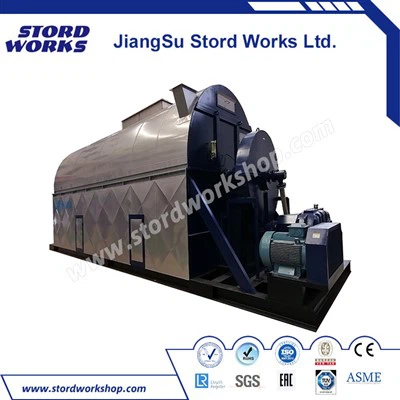
When I first started working as a Hollow Paddle Blade Dryer supplier, I spent countless late nights watching our units operate at a municipal wastewater treatment plant, observing how different blade shapes interacted with thick, wet waste sludge. What I noticed early on was that two dryers running side by side, both with the same total surface area and same heat input, produced dramatically different results-one delivered dry cake at 12% moisture in 90 minutes, while the other struggled to hit 25% moisture even after two hours. That day, I knew blade shape wasn't just a design detail; it was the core of drying performance.
Drying, at its most basic level, is about transferring heat to a material and then removing the generated moisture vapor. In hollow paddle dryers, the hollow blades aren't just mixing tools-they're the primary heat transfer surfaces, heated internally by steam, hot water, or thermal oil. The shape of these blades directly impacts three critical processes: heat transfer efficiency, material mixing and flow, and the prevention of particle agglomeration. Let's break this down, because understanding it is key to choosing the right dryer for your process, whether you're working with waste sludge, corn starch, or any other heat-sensitive or high-moisture material.
Heat Transfer: The Surface Area and Geometry Connection
Heat transfer in a hollow paddle dryer happens through two mechanisms: conduction from the blade surface to the material, and convection from the material's surface to the surrounding vapor. The blade shape determines how much of the blade's surface actually makes contact with the material, and how evenly that contact happens. Flat, rectangular blades-common in some older paddle dryer designs-have a straightforward surface area calculation, but they create "dead zones" where material sits between blades without touching any heated surface. When I compare these to the shaped blades we engineer here, the difference is night and day.
Our hollow paddle blades have a unique curved, segmented design that maximizes line contact with the material rather than just point contact. Each curved edge wraps around the flight of the adjacent blade, creating a narrow, consistent gap where material is constantly pressed against the heated surface. Studies on industrial drying processes show that curved blades increase effective heat transfer area by 15-20% compared to flat blades of the same overall footprint. This isn't just marketing-at a potato processing plant that switched from a flat-blade dryer to our unit, they reduced drying time for potato pulp by 28%, cutting their energy costs by nearly $12,000 a month.
But heat transfer isn't just about surface area; it's about maintaining a stable temperature difference between the blade surface and the material. Blades with sharp corners have hot spots that can scorch heat-sensitive materials like corn starch, while rounded blades distribute heat more evenly across the entire surface. A client running a Corn Starch Tube Bundle Dryer from a competitor told us they had recurring issues with starch discoloration, which was traced to sharp blade edges causing localized overheating. When they upgraded to our hollow paddle blades, they eliminated that discoloration and improved their starch yield by 4%. That's the kind of real-world impact blade shape has on product quality, not just drying speed.
Mixing and Flow: Keeping Material in Motion (and Not Clumping)
The second big role of blade shape is mixing. Wet materials like waste sludge, food residues, or starch often clump as they dry, and unbroken clumps act as insulators-trapping moisture inside and slowing drying. Blades that are too flat or too shallow don't generate enough shear force to break up these clumps, while blades that are too steep can over-shear, creating fine dust that's hard to collect and can pose safety risks for combustible materials.
Our blade design uses a helical pitch that's calibrated for each application. For high-moisture sludge, the blades have a shallower angle in the early stages of drying, when the material is still highly fluid, to gently lift and tumble it without splashing. As the material dries and becomes more solid, the blade angle steepens, creating more shear to break apart forming clumps. I remember a customer who was using a poorly designed paddle dryer for Paddle Dryer For Waste Sludge; they were getting clumps up to 6 inches in diameter that took hours to break down in a secondary crusher. After switching to our hollow paddle blade design, clump size reduced to less than 1 inch, eliminating the need for the secondary crusher and saving them $50,000 a year in maintenance and energy.
Flow is another critical factor. Blades that are symmetric can create "plug flow," where material moves through the dryer in a solid column, leaving the middle of the bed underprocessed. Our blades are asymmetric, with one side slightly longer than the other, which creates a swirling flow pattern that ensures every particle touches a blade regularly as it moves through the unit. For a chemical plant drying a paste that's prone to settling, this asymmetric flow reduced the amount of underprocessed material from 18% to less than 2%, which drastically cut waste and rework costs.
Agglomeration Prevention: The Hidden Cost of Poor Blade Design
I've seen firsthand how bad blade shape can lead to agglomeration. When material sticks to blades or to other particles, it builds up a layer that acts as insulation, reducing heat transfer and eventually requiring the dryer to be shut down for cleaning. Blades with smooth, non-stick surfaces paired with a shape that prevents material from accumulating are game-changers here.


Our blades have a rounded leading edge that slices through material without letting it stick, and we add a polished stainless steel finish that's optimized for low adhesion. For a Starch Drying Machine used in food production, this meant they could run their dryer for 72 consecutive hours without cleaning, compared to 12 hours with their previous unit. The impact on their productivity was massive-they were able to take on three additional production runs a week without adding equipment or staff.
But it's not just food and sludge. For biomass drying, where clumps can be large and sticky, blade shape directly affects how much energy is wasted on overcoming adhesion. A client in the wood pellet industry told us that with their old flat-blade dryer, 30% of the heat input was used just to break up stuck material and keep the unit moving. With our hollow paddle blades, that number dropped to 8%, freeing up energy to actually dry the material and increasing their pellet output by 12% in the same time frame.
Choosing the Right Blade Shape for Your Process
Here's the thing: there's no one-size-fits-all blade shape. What works for waste sludge might not work for corn starch, and what works for a low-temperature drying process won't work for a high-heat industrial application. That's why at our company, we don't just sell standard Hollow Paddle Blade Dryer units-we work with customers to design custom blade shapes tailored to their specific material and process requirements.
For example, when a major municipal water authority came to us needing to dry waste sludge with high fat content, we modified our standard blade shape to have deeper, more aggressive edges to cut through the fat that was causing excessive sticking. The result was a dryer that could process 20 tons of wet sludge per hour, down to 18% moisture, with 25% lower energy costs than their old equipment. For a specialty starch producer working with heat-sensitive modified starch, we used a blade shape with more gradual curvature to reduce shear, preventing the starch from losing its functional properties.
I always tell potential clients that the blade is the heart of the paddle dryer. You can have the latest control system, the best heat source, and the largest hopper, but if the blades aren't designed to work with your material, you'll never get the drying performance you need. I've seen too many businesses waste money on dryers that look the same on the outside but underperform because of a bad blade design. The difference between a good dryer and a great one is in those curved, calibrated edges that do the hard work of moving material, transferring heat, and preventing clumps.
Next Steps to Optimize Your Drying Process
If you're currently experiencing issues with drying speed, energy costs, product quality, or frequent downtime due to cleaning and clumping, the blade shape of your dryer is almost certainly a contributing factor. Whether you're working with waste sludge, corn starch, or any other material, investing in a properly engineered blade design can deliver significant improvements in performance and cost savings.
We've partnered with hundreds of businesses across industries to optimize their drying processes with custom blade designs for Paddle Dryer For Sludge Treatment, Corn Starch Tube Bundle Dryer, and other specialized units. If you'd like to learn how a hollow paddle blade dryer with purpose-designed blades can improve your drying performance, we're here to help. We can walk you through the engineering process, adjust blade geometries for your specific material, and provide real-world performance data from similar applications. Don't let a generic blade design hold your business back-let's work together to find the right solution for your drying needs.