As a technical sales engineer with over seven years in industrial drying solutions, I've walked more than 200 wastewater treatment plant (WWTP) managers and sludge processing operators through dryers on factory floors across North America and Southeast Asia. One question comes up at almost every site walkthrough: "If we're buying a sludge paddle dryer, does the heat source we use really make that big a difference?" At first, I'd explain the basics-steam vs. hot oil vs. hot water-and watch their eyes glaze over. But after helping a 50 MGD WWTP in Ohio cut their operational costs by 18% just by switching their heat medium, I realized this isn't a minor detail; it's the backbone of the dryer's performance, energy efficiency, and long-term reliability. If you're in the market for a Sludge Paddle Dryer, understanding how heat medium interacts with its hollow paddle blades and jacketed shell isn't just technical-it's how you avoid costly missteps like over-drying waste (which wastes energy) or under-drying it (which fails regulatory requirements).
To start, let's ground this in how a sludge paddle dryer works, because the heat medium's role isn't just "supplying heat"-it's part of the dryer's core heat transfer system. Unlike direct dryers that blast hot air over sludge, a paddle dryer is an indirect conductive dryer: heat moves from the medium (trapped inside the hollow paddles and the outer jacket) through the metal of the blades and drum, then into the wet sludge coating those surfaces. No air is used to carry moisture away, which is a huge win for sites with odor controls or air emission regulations. That indirect design means every component-from the blade shape to the heat medium's temperature, flow rate, and heat transfer coefficient-directly impacts drying rate, moisture content, and energy use. When operators come to us asking for a Paddle Dryer For Waste Sludge, the first question we ask after moisture targets and sludge throughput is what heat source they already have on-site. That's not a sales tactic-it's data from years of installations where mismatched heat medium led to weeks of downtime.
Let's break down the three most common heat mediums used in sludge paddle dryers: saturated steam, hot thermal oil, and pressurized hot water. Each has distinct properties that shift how the hollow paddle blades (a key feature of a Hollow Paddle Blade Dryer) transfer heat. Saturated steam is the most common, and for good reason: it's cheap, has a high heat transfer coefficient (HTC) at typical pressures, and condenses on the inner surfaces of the paddles and jacket, releasing latent heat of vaporization when it changes state to water. That latent heat-about 2,257 kJ/kg at 100°C-makes it far more efficient than sensible heat mediums (like hot water, which only releases heat as its temperature drops). For small to medium WWTPs (under 20 MGD) with existing low-pressure steam lines from on-site boilers, saturated steam is a no-brainer. But here's the catch: steam's temperature is tied directly to its pressure. At 1 bar absolute, steam is 100°C, which is enough to dry sludge to 20-25% solids (the typical regulatory target for land application or incineration) in 2-3 hours. But if you need higher solids (like 90% for pelletizing or landfilling), you need higher pressure steam-say 6 bar, which pushes temperature to 160°C. Some operators don't account for this: they buy a dryer sized for 100°C steam, then try to push it to 160°C and end up overheating the paddle blades, warping them and creating hot spots on the drum where sludge burns. I saw this at a plant in Michigan two years ago: they upgraded their boiler to get high-pressure steam but didn't adjust the dryer's pressure relief valve, leading to a $12,000 repair bill for blade replacement.
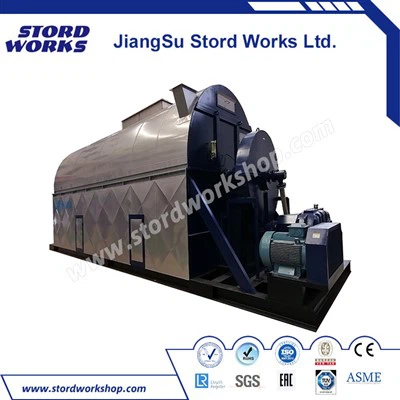
Next, hot thermal oil. This is the go-to heat medium for sites without on-site steam, or for applications needing variable temperatures that steam can't deliver. Thermal oil doesn't change state as it transfers heat-it stays liquid, transferring only sensible heat as it flows through the hollow paddles and jacket. Its temperature range is much wider: from room temp up to 300°C, which means it can handle both low-temperature drying (for sludge that's heat-sensitive, like industrial sludge with organic compounds that degrade above 150°C) and high-temperature drying (for dewatered sludge that needs to reach 90% solids for incineration). The downside? Its HTC is 30-50% lower than saturated steam, because it doesn't undergo a phase change. That means you need to run thermal oil at higher flow rates to compensate, which increases pump energy costs by 10-15% compared to steam. We also saw a recent issue with thermal oil: a food processing plant in Thailand was using our Rotary Tube Bundle Drum Dryer for food sludge, and their thermal oil started breaking down after two years due to high operating temperatures, which caused carbon buildup in the paddle channels. That blocked flow, reduced heat transfer, and forced a $5,000 thermal oil flush. The solution there? We suggested adding a heat exchanger to regulate oil temperature, which cut breakdowns by 90%.


Pressurized hot water is the third option, and it's the least discussed but most underrated for low-temperature applications. Hot water operates at temperatures up to 180°C (pressurized to keep it liquid) and has an HTC similar to thermal oil, but it's cheaper per unit than thermal oil and doesn't have the viscosity issues oil has at low temperatures. It's ideal for plants that only need to dry sludge to 40-50% solids (pre-thickening for lagoons or composting), because its lower temperature reduces odor emissions- a big win for plants near residential areas. The tradeoff is that it can't reach the high temperatures needed for 90% solids, so it's only for specific use cases. I talked to a WWTP in Portland last year that switched from steam to hot water for their pre-thickening process, and they cut their annual energy bills by $22,000 while reducing neighbor complaints by 60%. That's the kind of win that comes from matching the heat medium to the application, not just picking the cheapest option.
Now, let's get specific about how heat medium impacts performance metrics that matter to operators: drying rate, moisture uniformity, energy efficiency, and maintenance. Drying rate is the most immediate metric, and it's directly tied to the heat medium's HTC and temperature. For example, a sludge paddle dryer using 160°C high-pressure steam will have a drying rate of 15-20 kg of water per hour per square meter of heat transfer area (the total surface area of the hollow paddles and jacket). The same dryer using 180°C hot water will have a drying rate of 8-12 kg/m²/hr, and using 300°C thermal oil will be 10-14 kg/m²/hr. That means if you need to process 10 tons of dewatered sludge (20% solids) to 80% solids in 8 hours, a steam-powered dryer needs 50 m² of heat transfer area, while a thermal oil-powered one needs 80 m²-and that translates to a higher upfront equipment cost.
Moisture uniformity is another big one, especially for sites selling dried sludge as a soil amendment. If the heat medium has inconsistent flow (from blocked lines or a malfunctioning pump), you'll get hot spots on the paddle blades where sludge over-dries, and cold spots where it stays too wet. Steam is more consistent here because it's a constant phase-change medium-its temperature stays steady as long as pressure is steady, so heat transfer is uniform. Thermal oil is more prone to flow inconsistencies because it's a liquid, so even a small drop in pump speed can create dead zones in the hollow paddles. Hot water is somewhere in between, but its higher viscosity at lower temperatures can lead to similar flow issues. We had a customer in Texas who was using a thermal oil-powered paddle dryer and noticed a 5% moisture variation across batches; after upgrading their pump to a variable speed drive (VSD) to control oil flow, that variation dropped to 1.5%. That's a small fix that makes a huge difference for quality control.
Energy efficiency is where the heat medium really makes its mark. Saturated steam has a thermal efficiency of 85-90% because of latent heat transfer, while thermal oil is 70-75% and hot water is 75-80%. But that's only if the heat medium is sized correctly. The mistake I see most often is operators buying a dryer with a heat medium that's oversized for their throughput. For example, a plant that processes 5 tons of sludge per hour might buy a steam boiler sized for 8 tons, which means the dryer is running at part load more than 30% of the time. That's inefficient because steam condenses too quickly in the paddle channels, leading to un-used heat that's vented to the atmosphere. Thermal oil is worse here because its viscosity increases at low flow rates, so it requires more energy to pump when running part load. To avoid this, we always conduct a heat load calculation first, which takes into account sludge throughput, initial and target moisture content, ambient temperature, and plant heat availability. That's why when we send a customer a quote for a Sludge Paddle Dryer, we include a custom heat load report- it's not one-size-fits-all.
Maintenance is the final, often overlooked, way heat medium impacts performance. Saturated steam is clean, so it doesn't leave residue in the paddle channels-unless the boiler has high mineral content, which causes scaling on the inner walls. That scaling reduces HTC by 20% over time, so regular boiler water treatment is mandatory. Thermal oil, as I mentioned earlier, can break down at high temperatures, leading to carbon buildup that blocks paddle channels. That requires annual flushing and oil replacement, which adds $3,000-$5,000 to annual maintenance costs. Hot water is the easiest to maintain: it's cheap, so even if there's minor scaling, you can treat it with water softeners for a few hundred dollars a year. I've seen a plant in Florida switch from thermal oil to hot water and cut their annual maintenance costs by $12,000- that's enough to cover a new set of VSD pumps every two years.
Let's wrap this up with a real-world example to tie it all together. Last year, a 30 MGD WWTP in Ohio came to us because their existing direct dryer was failing emissions tests and costing $120,000 a year in natural gas. They were looking for an indirect dryer, so we recommended our Paddle Dryer For Waste Sludge and walked them through the heat medium options. They had an on-site 10-bar boiler that produced saturated steam at 180°C, so we sized a 120 m² sludge paddle dryer for them using that steam. The result? They cut their energy costs by $45,000 a year, reduced sludge volume by 70% (so hauling costs dropped by $30,000), and passed emissions tests with zero issues. Six months later, they called to say they were expanding their facility and adding a second line- same steam source, same heat medium, just a larger dryer.
If you're evaluating a sludge paddle dryer, don't make the mistake of focusing only on blade design or throughput rating. The heat medium is what turns the hollow paddle blades from metal into a high-performance drying system. Whether you have existing steam lines, need flexible temperature control, or are looking for low-maintenance operation, choosing the right heat medium will make your dryer last longer, run more efficiently, and meet your moisture targets every time. To learn more about our range of indirect drying solutions, from the specialized Hollow Paddle Blade Dryer to versatile options like the Rotary Tube Bundle Drum Dryer, we're here to help you match the right equipment and heat medium to your specific needs. Contact our team of drying experts to discuss your project and find the optimal solution for your sludge processing goals.