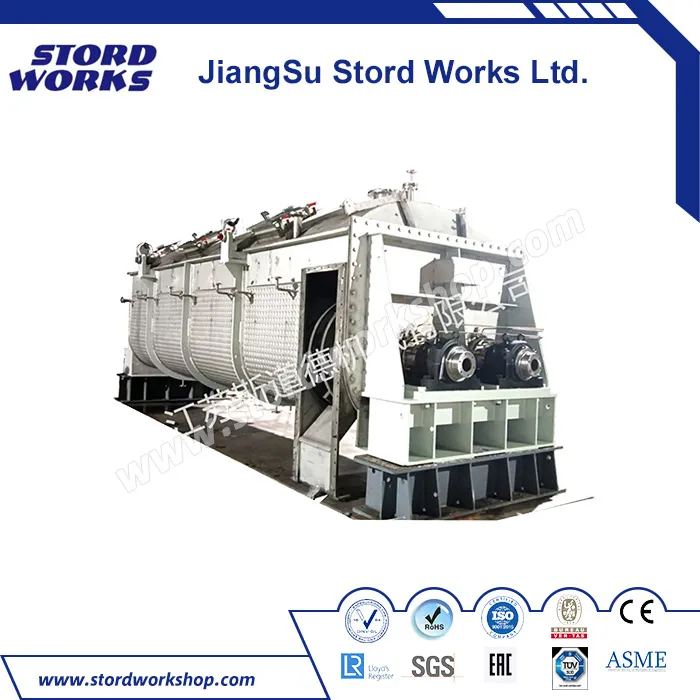
I. Hot Air System Optimization
Uniform Air Distribution: Properly arrange air inlets and outlets to avoid hot air short-circuiting and ensure heat is fully applied to the material.
Recycling: Recover heat from exhaust gas through heat pipe heat exchangers; preheating the air can save 15%-20% of energy.
Variable Frequency Fan: Use variable frequency fans to adjust speed, dynamically matching production needs and avoiding energy waste.
II. Precise Temperature and Humidity Control
Temperature Layered Control: Use high temperature (60~80℃) for rapid dehydration in the initial drying stage, then reduce to 40~50℃ in the later stage to prevent heat damage to the material.
Real-time Humidity Monitoring: Install humidity sensors to link with exhaust fans, maintaining relative humidity ≤30%.
Uniform Distribution of Heating Elements: Work with a circulating air system (circulation ratio 30%~70%) to balance temperature differences.
III. Equipment Configuration Optimization
Air Inlet and Exhaust Layout: Heat inlets and moisture outlets should be located close together (distance ≤ 2m) to form an efficient airflow path and reduce dead zones.
Longitudinal Multi-Point Moisture Exhaust Design: One moisture exhaust outlet is installed every 3m to evenly distribute humidity.
Insulation Materials: The outer shell uses nano-aerogel, ceramic fiber blankets, etc., with a thickness ≥ 50mm and an outer wall temperature ≤ 40℃.
IV. Energy-Saving Technology Application
Vacuum Drying Technology: By lowering the boiling point through a negative pressure environment, the drying temperature is controlled below 60℃, reducing energy consumption by 35% compared to the atmospheric pressure type.
Material and Structural Innovation: Titanium discs are used, resistant to acid and alkali corrosion, reducing maintenance costs.
Modular Design: Optimized disc arrangement and heat medium circulation path improve thermal efficiency to over 85%.