

As a supplier of Sludge Paddle Dryers, I often receive inquiries about the training requirements for operating these machines. In this blog post, I will delve into the essential training aspects necessary for safe and efficient operation of a Sludge Paddle Dryer.
Understanding the Sludge Paddle Dryer
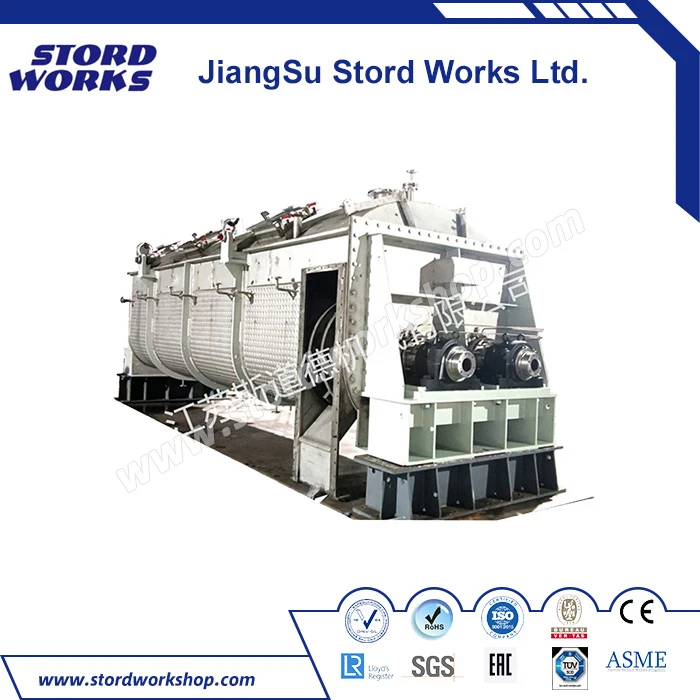
Before discussing the training requirements, it is crucial to have a basic understanding of what a Sludge Paddle Dryer is. A Sludge Paddle Dryer is a type of indirect dryer that uses a series of paddles to agitate and move the sludge through the drying chamber. The paddles are usually hollow and are heated by a heat transfer medium, such as steam or hot oil, which provides the energy needed to evaporate the moisture from the sludge.
This dryer is highly efficient in reducing the moisture content of sludge, making it easier to handle and dispose of. It is widely used in various industries, including wastewater treatment, food processing, and chemical manufacturing. For more information about our Sludge Paddle Dryer, you can visit our website.
General Safety Training
Safety is the top priority when operating any industrial equipment, and the Sludge Paddle Dryer is no exception. Operators must receive comprehensive safety training to prevent accidents and ensure a safe working environment.
Personal Protective Equipment (PPE)
Operators should be trained on the proper use of personal protective equipment, including safety glasses, gloves, ear protection, and respirators. PPE is essential to protect operators from potential hazards, such as dust, heat, and noise.
Machine Safety Features
The Sludge Paddle Dryer is equipped with various safety features, such as emergency stop buttons, interlocks, and guards. Operators must be trained to understand how these safety features work and how to use them in case of an emergency.
Fire and Explosion Prevention
Sludge drying involves the evaporation of moisture, which can create a flammable environment if not properly managed. Operators should be trained on fire and explosion prevention measures, including proper ventilation, grounding, and the use of explosion-proof equipment.
Technical Training
In addition to safety training, operators must also receive technical training to understand the operation and maintenance of the Sludge Paddle Dryer.
Machine Operation
Operators should be trained on how to start, stop, and adjust the operation of the Sludge Paddle Dryer. This includes understanding the control panel, setting the operating parameters, and monitoring the process variables, such as temperature, pressure, and flow rate.
Troubleshooting
Operators should be trained to identify and troubleshoot common problems that may occur during the operation of the Sludge Paddle Dryer. This includes issues such as blockages, leaks, and equipment malfunctions.
Maintenance
Regular maintenance is essential to ensure the proper functioning of the Sludge Paddle Dryer. Operators should be trained on how to perform routine maintenance tasks, such as cleaning, lubrication, and inspection. They should also be familiar with the recommended maintenance schedule and procedures.
Process Training
In addition to safety and technical training, operators should also receive process training to understand the drying process and how to optimize it for maximum efficiency.
Sludge Characteristics
Operators should be trained to understand the characteristics of the sludge being dried, such as its moisture content, particle size, and chemical composition. This information is essential for determining the appropriate drying parameters and ensuring the quality of the dried product.
Drying Parameters
Operators should be trained on how to adjust the drying parameters, such as temperature, residence time, and paddle speed, to achieve the desired moisture content and drying efficiency. They should also be familiar with the relationship between these parameters and the quality of the dried product.
Quality Control
Operators should be trained on how to monitor the quality of the dried product and ensure that it meets the required specifications. This includes testing the moisture content, particle size, and chemical composition of the dried product.
Training Delivery
The training for operating a Sludge Paddle Dryer can be delivered in various ways, including on-site training, classroom training, and online training.

On-Site Training
On-site training is the most effective way to train operators, as it allows them to learn directly from experienced technicians and operators. During on-site training, operators will have the opportunity to operate the Sludge Paddle Dryer under the supervision of a trainer and receive hands-on experience.
Classroom Training
Classroom training is a more theoretical approach to training, where operators will learn about the operation and maintenance of the Sludge Paddle Dryer through lectures, videos, and demonstrations. Classroom training is often used as a supplement to on-site training.
Online Training
Online training is a convenient and cost-effective way to train operators, as it allows them to learn at their own pace and from anywhere with an internet connection. Online training courses usually include video tutorials, interactive quizzes, and downloadable resources.
Conclusion
Operating a Sludge Paddle Dryer requires comprehensive training in safety, technical, and process aspects. By providing operators with the necessary training, you can ensure the safe and efficient operation of the dryer, reduce the risk of accidents, and improve the quality of the dried product.
If you are interested in purchasing a Sludge Paddle Dryer or need more information about our training programs, please feel free to contact us. We are committed to providing our customers with high-quality products and services and will be happy to assist you with your needs.


