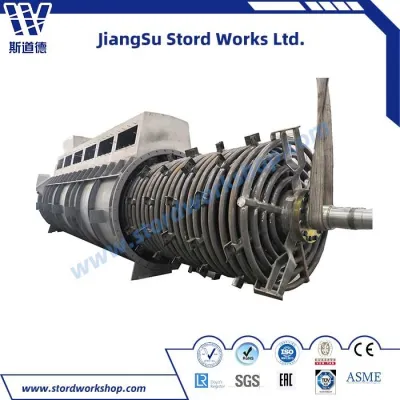
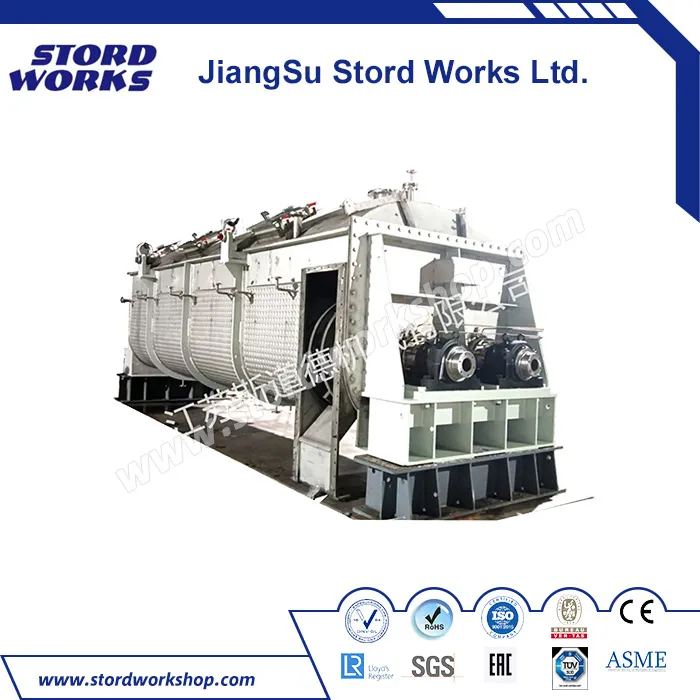
A regenerative heat exchanger is a remarkable piece of engineering that plays a crucial role in various industries, from power generation to chemical processing. As a supplier of heat exchangers, I've witnessed firsthand the importance and efficiency of these devices. In this blog, I'll delve into how a regenerative heat exchanger works, exploring its principles, applications, and benefits.


Basic Principles of Regenerative Heat Exchangers
At its core, a regenerative heat exchanger operates on the principle of heat transfer between two fluids through a solid medium. Unlike other types of heat exchangers that use a continuous flow of two separate fluids on either side of a barrier, a regenerative heat exchanger stores heat in a matrix or a bed and then releases it to the second fluid.
The process begins when a hot fluid passes through the heat exchanger. As it does so, it transfers its heat to the matrix, heating it up. Once the matrix is sufficiently heated, the flow of the hot fluid is stopped, and a cold fluid is introduced. The cold fluid then absorbs the heat stored in the matrix, thus getting heated up while cooling the matrix down. This cycle is repeated continuously, allowing for a highly efficient transfer of heat.
One of the key advantages of this design is that it can achieve very high heat transfer efficiencies, often exceeding 90%. This is because the heat is stored directly in the matrix, minimizing heat losses to the surroundings. Additionally, regenerative heat exchangers can handle high-temperature applications better than many other types of heat exchangers, as the matrix can withstand extreme temperatures without significant degradation.
Components of a Regenerative Heat Exchanger
A typical regenerative heat exchanger consists of several key components:
- Matrix or Bed: This is the heart of the heat exchanger. It is usually made of a material with high heat capacity and good thermal conductivity, such as ceramic, metal, or a composite material. The matrix is designed to have a large surface area to maximize the contact between the fluids and the solid medium, enhancing heat transfer.
- Inlet and Outlet Ports: These are used to introduce the hot and cold fluids into the heat exchanger and to remove the heated and cooled fluids respectively. The ports are typically designed to ensure a uniform flow of the fluids across the matrix, optimizing heat transfer.
- Valves or Diverters: These components are used to control the flow of the hot and cold fluids through the heat exchanger. They are responsible for switching the flow of the fluids between the heating and cooling cycles, ensuring that the matrix is alternately heated and cooled.
- Housing or Enclosure: This provides a protective covering for the heat exchanger, preventing heat losses to the surroundings and protecting the internal components from damage. The housing is usually made of a material with low thermal conductivity, such as insulation, to minimize heat transfer to the environment.
Working Cycle of a Regenerative Heat Exchanger
The working cycle of a regenerative heat exchanger can be divided into two main phases: the heating phase and the cooling phase.
Heating Phase
- The hot fluid enters the heat exchanger through the inlet port and flows through the matrix.
- As the hot fluid passes through the matrix, it transfers its heat to the solid medium, heating it up.
- The heated matrix stores the heat until the next phase.
- The cooled hot fluid then exits the heat exchanger through the outlet port.
Cooling Phase
- The cold fluid enters the heat exchanger through the inlet port and flows through the heated matrix.
- The cold fluid absorbs the heat stored in the matrix, getting heated up in the process.
- The cooled matrix is then ready to receive the hot fluid again in the next heating cycle.
- The heated cold fluid exits the heat exchanger through the outlet port.
This cycle is repeated continuously, allowing for a continuous transfer of heat from the hot fluid to the cold fluid.
Applications of Regenerative Heat Exchangers
Regenerative heat exchangers are used in a wide range of industries and applications, including:
- Power Generation: In power plants, regenerative heat exchangers are used to preheat the feedwater before it enters the boiler. This reduces the amount of fuel needed to heat the water, improving the overall efficiency of the power generation process. They are also used in gas turbine engines to recover heat from the exhaust gases, increasing the power output and efficiency of the engine.
- Chemical Processing: In the chemical industry, regenerative heat exchangers are used to recover heat from high-temperature chemical reactions. This can reduce energy consumption and improve the overall efficiency of the production process. They are also used in distillation columns to preheat the feedstock, enhancing the separation efficiency.
- Metallurgy: In the metallurgical industry, regenerative heat exchangers are used to preheat the air or fuel before it enters the furnace. This increases the combustion efficiency and reduces the energy consumption of the furnace, resulting in significant cost savings.
- Environmental Applications: Regenerative heat exchangers are also used in environmental applications, such as waste heat recovery from industrial processes. By recovering the waste heat, these heat exchangers can reduce greenhouse gas emissions and improve the overall sustainability of the industry.
Types of Regenerative Heat Exchangers
There are several types of regenerative heat exchangers, each with its own unique characteristics and applications:
- Fixed Matrix Regenerators: In this type of heat exchanger, the matrix is stationary, and the hot and cold fluids are alternately passed through it using valves or diverters. Fixed matrix regenerators are commonly used in applications where a continuous flow of heat transfer is required, such as in power plants and chemical processing.
- Rotary Regenerators: In a rotary regenerator, the matrix rotates continuously between the hot and cold fluid streams. This design allows for a more continuous and uniform transfer of heat, as the matrix is constantly exposed to both the hot and cold fluids. Rotary regenerators are often used in applications where high heat transfer rates are required, such as in gas turbine engines.
- Recuperative-Regenerative Heat Exchangers: These heat exchangers combine the features of both recuperative and regenerative heat exchangers. They typically have a primary recuperative section for initial heat transfer and a secondary regenerative section for further heat recovery. This design allows for a higher overall heat transfer efficiency and can be used in a wide range of applications.
Our Heat Exchanger Products
As a heat exchanger supplier, we offer a wide range of high-quality heat exchangers, including Spiral Heat Exchanger, Titanium Tube Heat Exchanger, and Evaporative Condenser. Our products are designed to meet the diverse needs of our customers, providing efficient and reliable heat transfer solutions for various industries.
Our spiral heat exchangers are known for their compact design and high heat transfer efficiency. They are ideal for applications where space is limited and a high degree of heat transfer is required. The titanium tube heat exchangers, on the other hand, offer excellent corrosion resistance and can be used in harsh chemical environments. Our evaporative condensers are designed to provide efficient cooling by utilizing the latent heat of evaporation, making them a cost-effective solution for many industrial applications.
Why Choose Our Heat Exchangers
When you choose our heat exchangers, you can expect the following benefits:
- High Efficiency: Our heat exchangers are designed to achieve maximum heat transfer efficiency, reducing energy consumption and operating costs.
- Reliability: We use high-quality materials and advanced manufacturing techniques to ensure the reliability and durability of our products. Our heat exchangers are built to withstand harsh operating conditions and require minimal maintenance.
- Customization: We understand that every customer has unique requirements. That's why we offer customized heat exchanger solutions to meet your specific needs. Our team of experienced engineers can work with you to design and manufacture a heat exchanger that is tailored to your application.
- Technical Support: We provide comprehensive technical support to our customers, from installation and commissioning to maintenance and troubleshooting. Our team of experts is always available to answer your questions and provide you with the assistance you need.
Contact Us for Your Heat Exchanger Needs
If you are in the market for a high-quality heat exchanger, we invite you to contact us to discuss your requirements. Our team of experts will be happy to provide you with more information about our products and services, and to help you choose the right heat exchanger for your application. Whether you need a regenerative heat exchanger for a power plant, a spiral heat exchanger for a chemical process, or a titanium tube heat exchanger for a corrosive environment, we have the solution for you.
References
- Incropera, F. P., & DeWitt, D. P. (2002). Fundamentals of Heat and Mass Transfer. Wiley.
- Kreith, F., & Bohn, M. S. (2001). Principles of Heat Transfer. Cengage Learning.
- Shah, R. K., & Sekulic, D. P. (2003). Fundamentals of Heat Exchanger Design. Wiley.